Navigating life's intricate web of regulations and personal milestones often boils down to a single, seemingly simple factor: your age. But "how old are you?" is rarely as straightforward as it seems when it comes to legal compliance, eligibility, and strategic life planning. This is precisely where Age-Related Legal & Milestone Calculators become indispensable tools, offering clarity and precision for everything from understanding your voting rights to mapping out your retirement. They transform a basic date into a powerful dataset, ensuring you're not just guessing, but confidently meeting the demands of the law and orchestrating your future with informed decisions.
At a Glance: Key Takeaways
- Compliance is King: Accurate age calculations are crucial for meeting legal requirements in areas like voting, driving, employment, and contracts, protecting both individuals and organizations.
- Definitions Matter: Understand "Legal Age Requirements" (eligibility) and "Age Verification" (proving age).
- Beyond Simple Math: Dedicated age calculators account for leap years, varying month lengths, and time zones for pinpoint accuracy.
- Tailored Tools: Different calculator types exist for current age, future milestones, retirement planning, and even identifying your generational cohort.
- Actionable Steps: Learn how to use these tools for both legal compliance and personal life planning.
- Not a Legal Substitute: While powerful, these calculators are informational; always use official documentation for legal age verification.
The Unseen Power of Age: Why It Governs So Much
Age isn't just a number on your birthday cake; it's a fundamental determinant of your rights, responsibilities, and opportunities within society. From the moment you're born, legal frameworks begin to assign specific capacities and restrictions based on your age. These age-based regulations are designed to protect vulnerable populations, ensure appropriate participation in civic and economic life, and establish clear, unambiguous eligibility criteria for services, activities, and legal capacities.
Think about it: the age you can drive, purchase alcohol, enter into a contract, or even vote profoundly shapes your daily life. For individuals, knowing your exact standing helps you assert your rights and plan effectively. For organizations, accurate age verification isn't just good practice; it's a legal imperative. It helps them comply with laws, safeguard minors, prevent fraud, and ultimately, avoid costly legal issues. Without precise age calculations, navigating these complexities would be a constant source of ambiguity and potential legal pitfalls.
Defining the Essentials: Legal Age Requirements & Age Verification
Before diving into the tools, let's clarify the bedrock concepts that make age calculation so vital.
- Legal Age Requirements: These are the age-based regulations that dictate your eligibility for various activities, services, and legal capacities. Critically, these vary significantly by jurisdiction (state, country) and by the specific activity in question. What's legal at 18 in one country might be restricted until 21 in another.
- Age Verification: This is the process of confirming an individual's age. It's the practical step organizations take to ensure compliance with those legal age requirements. This usually involves checking official documentation.
Understanding this distinction is key: a calculator helps you know your age relative to a requirement, while verification is the official process of proving it.
Key Legal Ages You Need to Know
While specific ages can fluctuate, here are some of the most common legal age requirements you'll encounter, illustrating the broad impact of age on everyday life:
- Voting Age: In most democratic nations, including the United States, citizens gain the right to vote at 18 years old.
- Driving Age: This typically ranges from 16 to 18, depending on the state or country, often with tiered licensing systems and restrictions for younger drivers.
- Drinking Age: This is a particularly varied one. In many countries, it's 18, but in the United States, it's 21.
- Employment Age: Minors can often begin working as young as 14 or 16, but usually with significant restrictions on hours, types of work, and school attendance. These rules are in place to protect young workers.
- Contractual Capacity: Generally, you must be at least 18 to enter into legally binding contracts (like leases, loans, or major purchases) in most jurisdictions.
- Age of Majority: This is the age at which a person is legally considered an adult, gaining full legal rights and responsibilities. In most countries, this is 18.
These examples underscore why knowing one's precise age, and the corresponding legal thresholds, isn't just academic; it's fundamental to engaging fully and legally with the world around you.
Beyond the Birth Date: The Power of Age Calculator Tools
While you can always do the math yourself, age calculator tools offer a level of precision and convenience that manual calculations simply can't match. These digital aids are built to provide exact age calculations, often down to days, hours, and even minutes. They expertly account for critical factors like leap years, the varying lengths of months, and even time zone considerations, ensuring the result is impeccably accurate according to the Gregorian calendar system.
Imagine needing to know the exact duration between two dates spanning multiple decades, including several leap years. A calculator tool handles this complexity instantaneously, providing an undeniable benefit over tedious manual computation.
Different Calculators for Different Needs
Not all age calculators are created equal. They're specialized to serve distinct purposes, moving beyond just telling you "how old you are."
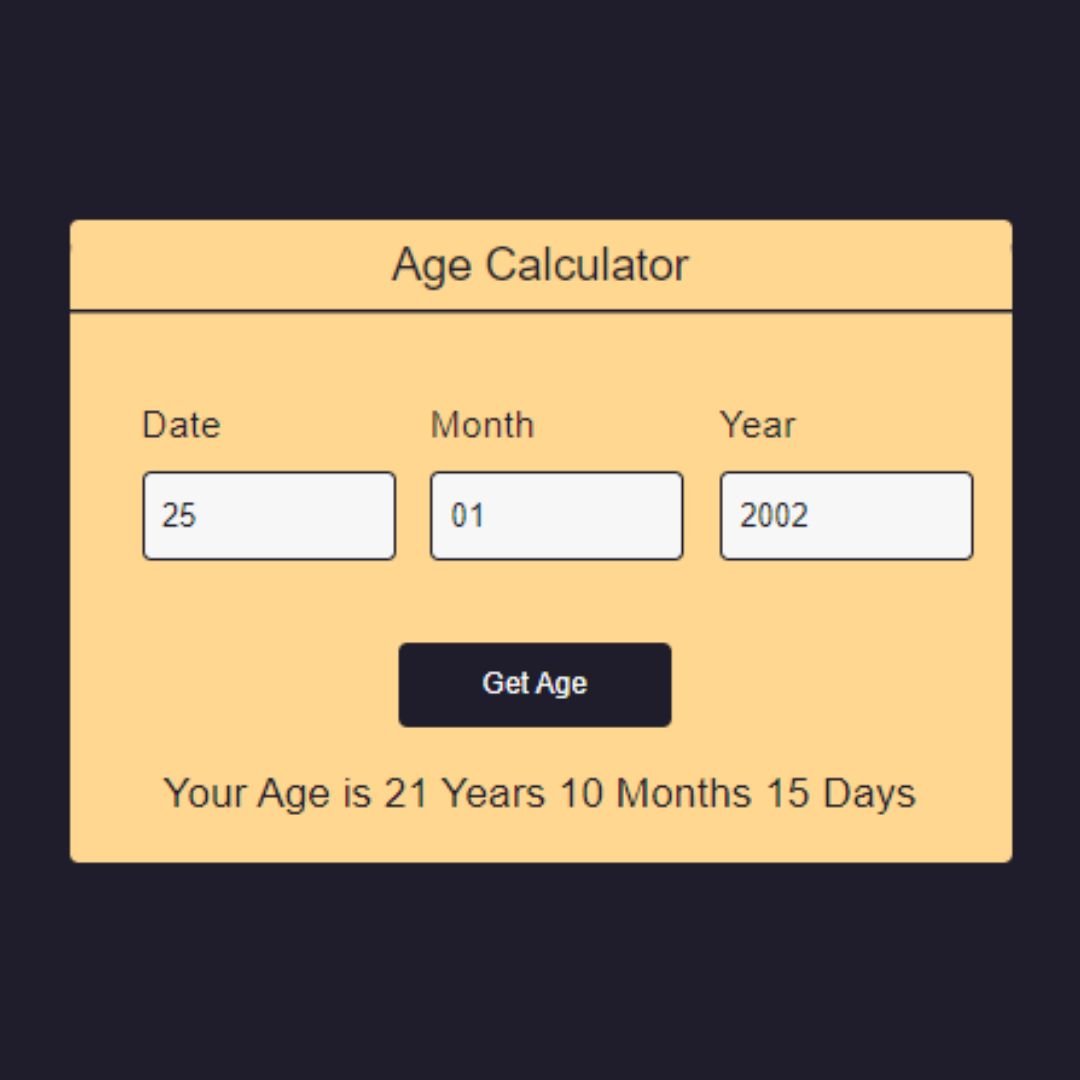
- Current Age Calculator: This is the most common type. You input a birth date, and it tells you your precise age right now, in years, months, and days. It's essential for legal documentation, demographic analysis, and even tracking personal milestones like anniversaries. Try our age generator to see how quickly you can get this information.
- Age Milestone Calculator: Want to know when you'll hit a significant birthday, like your 30th or 65th? Or perhaps when you'll reach a specific legal milestone, such as eligibility for certain government benefits? This tool helps you pinpoint those future dates, aiding in long-term planning. It's also fantastic for setting personal goals.
- Retirement Age Calculator: Planning for the golden years? This calculator focuses on the time remaining until your target retirement date, helping you visualize your financial planning timeline. It can also assist in determining eligibility for Social Security or pension benefits, offering crucial insights for your financial strategy.
- Life Stage Calculator: This unique tool goes beyond mere numbers, helping you categorize your current life phase. By inputting your birth year, it can identify your generational cohort (e.g., Baby Boomer, Gen X, Millennial, Gen Z). This offers age-appropriate guidance and insights into typical characteristics, trends, and even potential financial implications associated with your generation.
Each type serves a distinct, valuable purpose, allowing you to slice and dice age-related data in ways that empower both compliance and personal growth.
Putting Calculators to Work: Actionable Steps for Compliance & Planning
Understanding the different types of calculators is one thing; effectively using them is another. Here’s how to integrate them into your compliance strategies and life planning.
For Legal Compliance: Ensuring You Meet the Mark
Organizations, or individuals needing to prove their legal standing, can use a structured approach:
- Determine Current Age Accurately: Use a reliable current age calculator to get the precise age of the individual in years, months, and days. This is your baseline.
- Identify Specific Age Requirements: For the activity or service in question, research and verify the applicable legal age requirements by jurisdiction. Is it 18 for contractual capacity in your state? 21 for alcohol purchase? Be absolutely sure of the specific regulation.
- Compare Ages for Eligibility: Simply compare the individual's accurately calculated current age with the required legal age. This quickly determines eligibility.
- Verify with Official Documentation: This step is paramount. While the calculator gives you the number, official age verification always requires official documents like a birth certificate, passport, or government-issued identification. No calculator can replace this.
- Maintain Accurate Records: For organizational compliance, keep meticulous records of all age verifications and calculations. This provides an audit trail and demonstrates due diligence should legal questions arise.
For Personal Planning with an Age Calculator Tool: Charting Your Future
For individuals looking to leverage these tools for personal insight and planning, the steps are more straightforward:
- Select the Right Calculator: Based on your specific need—whether it's knowing your exact age today, marking a future milestone, planning for retirement, or understanding your generational context—choose the appropriate age calculator type.
- Enter Your Information: Input your birth date. For milestone or retirement calculators, you might also enter a target date or goal.
- Review and Interpret the Results: Analyze the output. This could be your age broken down into minute detail, a list of upcoming milestones, a clear timeline to retirement, or insights into your life stage and generational classification. Use these insights to inform your decisions, from setting new fitness goals to re-evaluating your financial portfolio.
Demystifying Generations: Life Stage Calculators and Generational Cohorts
One fascinating application of age calculators is their ability to place you within a "life stage" or "generational cohort." These classifications aren't just labels; they represent shared historical experiences, technological exposure, and cultural influences that often shape perspectives, consumer habits, and even workplace dynamics.
Here's a quick rundown of commonly recognized generations (exact start/end dates can vary slightly by source):
- Baby Boomers: Born roughly 1946–1964. Characterized by post-WWII economic boom, civil rights movements, and the advent of television. Many are now in or approaching retirement.
- Generation X: Born roughly 1965–1980. Often called the "latchkey generation," known for independence, adaptability, and technological transition (from analog to digital).
- Millennials (Generation Y): Born roughly 1981–1996. The first generation to grow up with the internet and mobile technology. Known for digital native fluency, social consciousness, and a focus on work-life balance.
- Generation Z (Gen Z): Born roughly 1997–2012. True digital natives, hyper-connected, entrepreneurial, and diverse. They prioritize authenticity and impact.
A life stage calculator helps you identify which cohort you belong to, offering a lens through which to understand broad societal trends and your place within them. It's a powerful way to gain self-awareness and contextualize your experiences.
Important Considerations: Disclaimers and Limitations
While incredibly useful, it’s crucial to approach age calculators with a clear understanding of their purpose and limitations.
- Informational & Planning Only: These tools are primarily designed for informational and personal planning purposes. They are excellent for quick checks, understanding eligibility criteria, and general life mapping.
- Not for Official Legal Verification: Under no circumstances should an age calculator be used as the sole source for legal or official age verification. When legal standing is required, official age verification necessitates certified documents such as birth certificates, government-issued identification cards, or passports, and often involves specific legal procedures.
- Context Matters: While age calculators provide accurate numerical calculations, any age-related decisions should always consider individual circumstances and, where appropriate, professional guidance (e.g., from legal counsel or financial advisors).
- No Life Expectancy Predictions: These tools calculate your age based on past dates; they do not predict individual life expectancy or future health outcomes.
- Single-Person Focus: Typically, these calculators process one person's birth date and information at a time. For demographic analysis of large groups, specialized software is used.
Using these tools responsibly means appreciating their power while respecting their boundaries.
Moving Forward: Empowering Your Life Journey
Age-Related Legal & Milestone Calculators are more than just digital novelties; they are essential instruments in an increasingly complex world. They provide the precision needed for legal compliance, safeguard individuals and organizations alike, and empower personal planning with clear, accurate data.
By understanding the various types of calculators available and following actionable steps for their use, you can confidently navigate legal age requirements, pinpoint crucial life milestones, strategize for retirement, and even better understand your place within generational shifts. Embrace these smart tools to transform abstract age figures into concrete insights, allowing you to live a more informed, compliant, and well-planned life.